
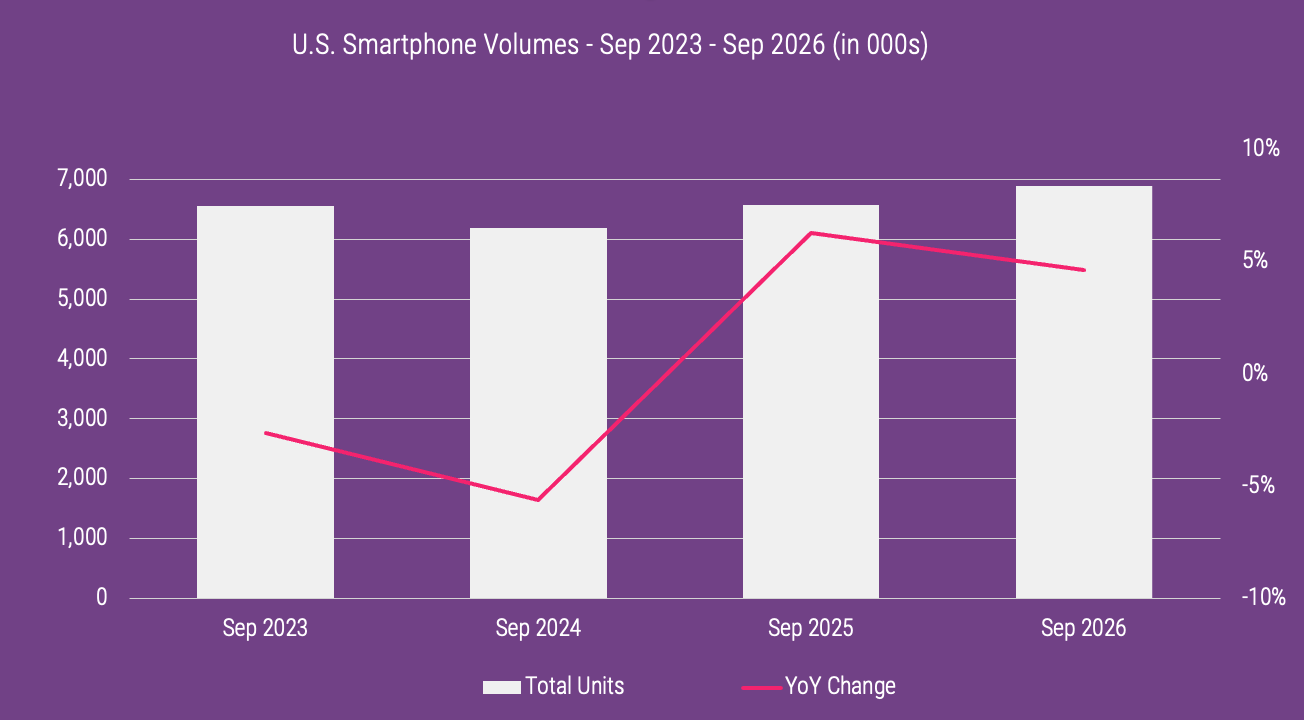
The U.S. smartphone market remained resilient in September, with new smartphone unit sales increasing 5% year over year, closely matching the 6% growth recorded in September 2025. The performance is particularly noteworthy given the continued rise in smartphone prices driven by memory shortages and Verizon's ongoing efforts to promote BYOD adoption. Offsetting these pressures were carrier initiatives aimed at improving affordability, including T-Mobile's transition from 24-month to 36-month financing terms and Verizon's introduction of 48-month financing for unsubsidized device purchases.
While unit growth remained moderate, revenue growth was substantially stronger. MSRP-based smartphone revenues increased 15% year over year in September, fueled by higher device pricing and a significant shift toward premium-tier smartphones. Apple's decision to delay the launch of the more affordable iPhone 18 left the higher-priced iPhone 18 Pro models as the primary upgrade option during the month, further lifting average selling prices. As a result, smartphones priced at $1,250 and above accounted for 31% of all smartphone unit sales in September, up from just 18% a year ago.
Apple maintained its leadership position in the U.S. smartphone market, though unit sales were essentially flat compared to last September. The company's revenue performance told a different story, with sales revenues increasing 16% year over year as consumers gravitated toward premium-priced models. The delayed introduction of the base iPhone 18 significantly altered Apple's product mix, driving higher spending among those choosing to upgrade ahead of the holiday season.
Samsung emerged as the primary volume growth driver during September, with unit sales increasing 31% year over year. Growth was supported by strong demand for the new Galaxy Z foldable portfolio, continued momentum from the Galaxy S26 FE, and healthy sales of the A-series lineup in prepaid channels. Samsung's revenues also increased sharply, rising 24% year over year. Beyond the contribution from foldables, the company benefited from broad-based pricing increases, including an unprecedented mid-cycle price adjustment on the Galaxy S26 series during September.
Looking ahead to Q4, the market faces several potential headwinds. Apple is likely to encounter volume pressure due to the absence of the base iPhone 18 and extended delivery times for the newly launched iPhone Duo foldable, where lead times have stretched to approximately three months. At the same time, Circana's latest Holiday Shopping Report points to softer consumer demand for smartphones during the holiday season. Combined with growing BYOD adoption and carriers' continued pullback on subsidies for low- and mid-tier postpaid plans, the U.S. smartphone market is likely to face a challenging comparison against the strong results posted in Q4 2025.